Welcome to visitShanghai Chinon medical Model & Equipment Manufacturing Co., LTD

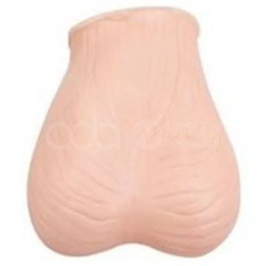
Quick answer. The BIX-LV45 is a lifelike scrotal model with realistic feel, designed for testicular cancer palpation practice and for demonstrating tumour lesions at different stages of development. It is a rehearsal tool for the mechanics and vocabulary of examination, used before supervised contact with patients.
Testicular examination is one of the few physical skills where students are expected to be competent before they have had much practice. Consent, chaperoning and dignity all constrain how often a learner can examine a real patient, and testicular cancer presents as a lump that must be described accurately — size, side, consistency, transillumination, associated swelling.
| Element | What it provides | Teaching use |
|---|---|---|
| Surface anatomy | Scrotal form with realistic look and feel | Hand position, systematic sequence, patient communication |
| Palpation | Realistic consistency of contents | Distinguishing testis, epididymis and cord |
| Pathology set | Demonstration of tumour lesions at different stages | Describing a lump by size, consistency and fixation |
| Setting | Bench-top model, no power required | Small-group teaching in any seminar room |
Sequence and consent language. Students can rehearse the whole encounter — explain, position, palpate, describe — without an audience of real patients. Reviews of patient involvement in teaching intimate examinations show that structured preparation before patient contact improves both student confidence and patient experience [1].
Describing findings. The most common failure in a student examination note is not the finding, it is the description. Staged lesions give students something concrete to describe with the correct vocabulary: smooth or irregular, mobile or fixed, tender or non-tender.
Reducing error in size estimation. A simulation-based workshop reduced inaccuracies in testicular volume estimation among learners, which is the kind of measurable outcome a model can support [2]. If your curriculum includes orchidometer use, add a volume-estimation task to the session.
Model-making for testicular swellings has been described in clinical teaching literature, and the reported advantage is the same one this model offers: a reproducible set of findings that every student in the cohort meets [3].
Be explicit with students about these limits. A model that is presented as a substitute for patient contact produces false confidence, particularly around consent.
Quotation. Lesion set, material specification and pricing for the BIX-LV45 are available from chinonmed@adaanatomy.com; tell us your cohort size and whether you need interchangeable lesion modules.
Q1. What is the BIX-LV45 used for? Testicular cancer palpation practice and demonstration of tumour lesions at different stages of development.
Q2. How realistic is the feel? The model is described as lifelike in appearance and feel, with realistic consistency intended for palpation training rather than for surgical simulation.
Q3. Can it replace examination of real patients? No. It prepares students for supervised patient contact; consent, communication and skin variation must be taught with patients.
Q4. Are the lesions interchangeable? Ask the supplier for the lesion set and whether modules can be swapped for unknown-lesion assessment.
Q5. Is it suitable for nursing or physician associate programmes? Yes, wherever scrotal examination is part of the curriculum. It is also used for patient-education rehearsal.
Q6. How should it be cleaned? Follow the supplier's disinfectant guidance for intimate-area models; usually a mild detergent wipe followed by an approved low-level disinfectant.
Product page: BIX-LV45 Testicular Examination Model: What a Trainer Can Teach — specification, packing data and a quotation request form.
For the BIX-LV45 lesion set or a quotation, write to chinonmed@adaanatomy.com.
|
NEXT:Teaching Arterial Puncture and IM Injection on the HS5 Arm Trainer
LAST:NULL |
Return list |
